
International Postgraduate Diploma in Financial Management (Level 7)
Earn a qualification recognising your professional expertise in Healthcare management and enhance your skills in leading online learning initiatives.
About the course
Aim of the Programme:
The International Postgraduate Diploma in Financial Management is designed to allow the learner to develop a critical understanding of the areas of Finance and Management and their underlying processes from both a theoretical and practical perspective. It will also provide the learner with a learning experience to prepare for subsequent career development and achieve effective performance in various financial and business management roles and organizations.
The International Postgraduate Diploma in Financial Management qualification is designed for learners with relevant experience and qualifications, the knowledge and skills they need to function in accounting and finance. For learners with prior experience in accounting and finance and with a professional qualification, the pathway through this Programme will develop their professional competence.
Programme Structure
This program consists of 6 compulsory units, which are equal to a total of 120 credits.
Course details
Mode of Study: BlendedAssessment: Research-based Assignments
After the successful completion of the programme, the learner will;
- Apply techniques and tools for investment analysis to evaluate potential investment opportunities.
- Analyze global financial markets, assess strategic options, and develop financial strategies for multinational corporations.
- Manage working capital efficiently, optimize cash flow, and evaluate trade-offs between liquidity and profitability.
- Interpret financial statements and ratios to evaluate a company's financial performance, financial health, and risk profile.
- Conduct a strategic audit of a company's financial position and identify key issues and challenges that could impact future performance.
- Develop and implement strategic financial management plans to optimize capital structure, mitigate financial risk, and maximize shareholder value.
Module: ASSIGNMENT & STUDY GUIDELINES
Lecture: 4
This module provides the most critical information about the study course and assignment submission.
Harvard Referencing Style Guide
How to Summarise - Assignment Guide
Summarising, Paraphrasing, Quotation for your Assignment
Official Title Pages
Module: INVESTMENT ANALYSIS
Lecture: 5
Quiz: 1
Module Objective
This unit's objective is to enable learners to acquire a practical grasp and comprehension of investment theories and market equilibrium models. Engaging with this unit will empower learners to conduct bond valuations and assess present performance. Upon successfully finishing this unit, learners will have honed their abilities to scrutinize the repercussions of global market developments and their causal factors. Learners will also be proficient in providing valuable suggestions for enhancing future performance.
Introduction to Investment Analysis
Analysis of Bonds, Forward and Futures
Stock Investment and Portfolio Management
Principles of Taxation
Investment Risk Management
Investment Analysis
Module: GLOBAL FINANCE & STRATEGY
Lecture: 5
Quiz: 1
Aim of the Module
The objective of this unit is to enhance learners’ comprehension of the various decisions required when venturing into international markets. Learners will grasp the significance of autonomy in resolving financial challenges within defined timeframes, a critical factor for achieving business success.
Understanding The Global Business Landscape
Developing Strategies to Enhance Organisational Value
Understanding the Role of Strategic Decisions and their Financial Impact
Understanding Sources of Finance & Techniques to Manage Global Risk
Understanding Potential Investment Decisions & Global Strategies
QUIZ - Global Finance and Strategy
Module: WORKING CAPITAL MANAGEMENT
Lecture: 4
Quiz: 1
The aim of this unit is to allow learners to gain an in-depth understanding of working capital and working capital management.
Concepts in Cash Management, Receivables, and Inventory Management
Assessment of Working Capital and Lending Methods
Exploring the Concept of Working Capital Management
Understanding the Working Capital Investment Policies
QUIZ-Working Capital Management
Module: FINANCIAL STATEMENT ANALYSIS
Lecture: 4
Quiz: 1
**Module Objective**
This course centers on the analysis and interpretation of financial statements as a means to assess a company's financial well-being and performance. It encompasses subjects like ratio analysis, cash flow assessment, and predictive methodologies. The primary aim of this course is to equip students with the competencies required to make well-informed choices regarding investments and financial administration.
Overview of Financial Statements
Understanding the Statement of Income and Balance Sheet
Understanding Statement of Cash flow and Non-financial Statements
Financial Statement Analysis Tools Techniques and Standards
Financial Statement Analysis
Module: STRATEGIC AUDIT
Lecture: 3
Quiz: 1
Module Objective
Upon successfully completing this unit, learners will acquire the necessary knowledge and comprehension to effectively implement business strategies in a managerial context. This entails a comprehensive exploration of the strategic auditing process and its associated methodologies. Learners will develop the capability to employ appropriate investigative methods in diverse business environments, whether favorable or challenging.
Understanding Audit strategy and process
Historic and Current Audit Process and Procedure
Understanding Risks and Current Development in Auditing
QUIZ - Strategic Audit
Module: STRATEGIC FINANCIAL MANAGEMENT
Lecture: 12
Quiz: 1
Module Objective
Upon finishing this unit, participants will acquire knowledge and comprehension pertaining to the strategic allocation and control of financial assets within a corporate entity. Participants will recognize the significance of achieving corporate goals while optimizing returns for shareholders. Furthermore, participants will develop practical expertise in devising business strategies and crafting extensive business blueprints.
Understanding cost system and its classification
Concepts and Tools of Cost Accounting
CASE STUDY - Activity based costing in Xu Ji Electric Co. Ltd
Understanding the Concept and Classification of Sources of Funds
CASE STUDY - Global Fund Raising Strategies
Understanding The Financial Performance Analysis
CASE STUDY - Financial Analysis Reporting
Understanding the Financial Ratios and its Various Types
Understanding The Budgetary Concepts and Approaches
CASE STUDY - How Maritz Accomplished a 40% IT Budget Reduction
Understanding the Working Capital Management
Understanding the Investment Appraisal Techniques
QUIZ - Strategic Financial Management
Accreditation
All of our courses are accredited by the relevant partners and awarding bodies. Please refer to our information in about us for more details.Entry requirement
For entry onto theInternational Postgraduate Diploma (IPGD) in Financial Management qualification, learners must possess:
- An honours degree in a related subject or the UK level 6 diploma or equivalent overseas qualification, i.e. bachelor's Degree or Higher National Diploma
OR
- Mature learners (over 25) with at least five years of management experience if they do not possess the above qualification (this is reviewed on a case-by-case basis)
Our recognised certificate
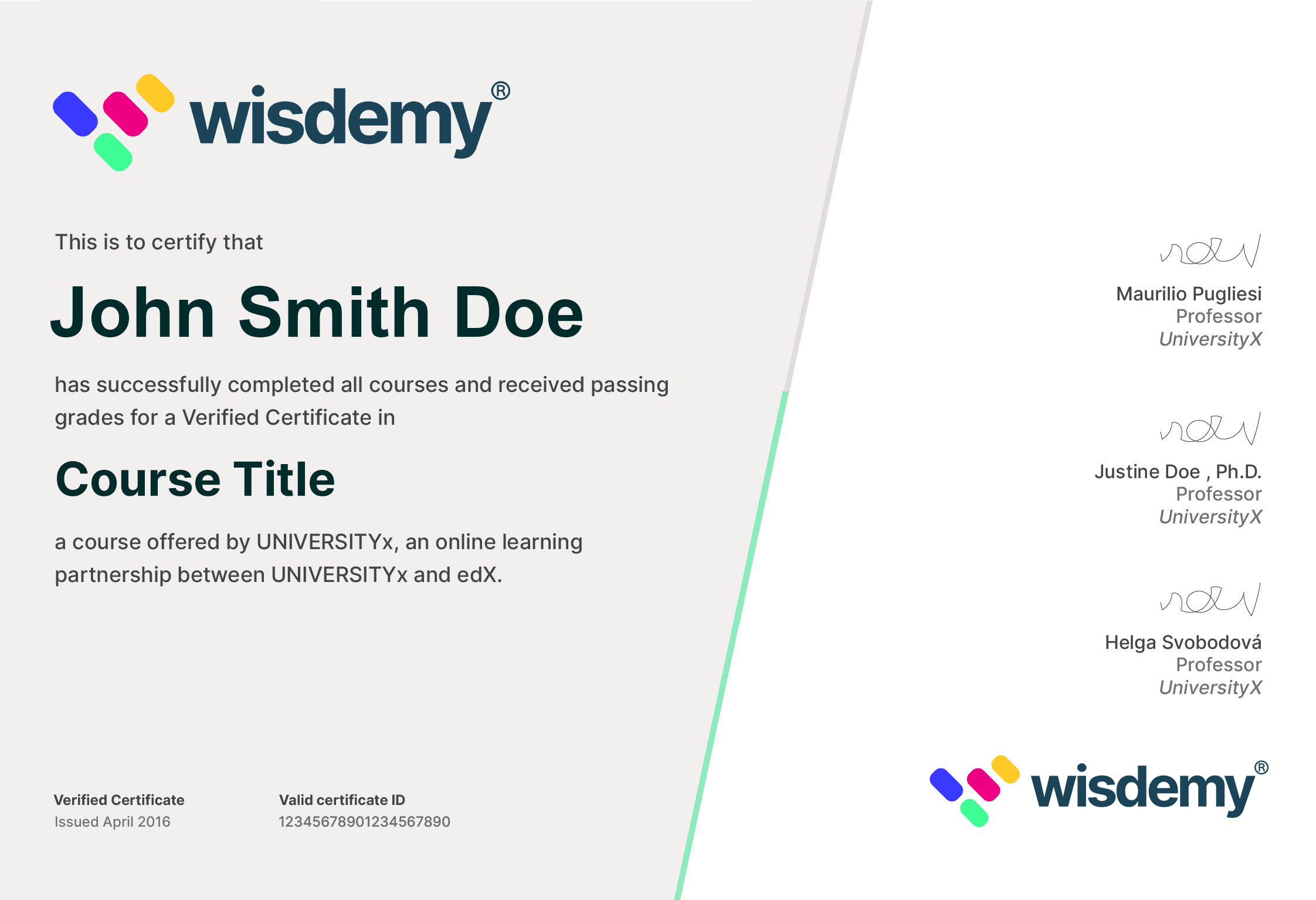
Boost your career and your talents.
With a validated certificate that demonstrates your learning, wow your employer.
Take up a challenge.
All of us occasionally need an additional push. You stay motivated by working for a credential.
Let the world know about it.
Using the special URL we give you, you may safely distribute your validated certificate to others.
Request follow-up
Fill in the form below and one of our student advisers will contact you soon.
How learners like you are achieving their goals
Executive Education
A smart way to enhance my knowledge within a short period of time, the course is very productive and beneficial for me...so grateful that i completed successfully...i would recommend my friends and family about the course.

Andrew Samson
MaldivesExecutive Education
Truly enjoyed the Strategic Management and Leadership Level 7 course and it provided me with a clear insight and helped me in my daily work as Plant Manager.

Jason Momodu
VietnamExecutive Education
The modules were well structured, and gave me the knowledge to make sound decisions that maximize performance.

Jason Momodu
VietnamExecutive Education
I have learned a lot and gain experienced in this course. At first, I did not have confidence when standing front of audience but now, it is a different story.

Jason Momodu
VietnamExecutive Education
Truly enjoyed the Strategic Management and Leadership Level 7 course and it provided me with a clear insight and helped me in my daily work as Plant Manager.
Joe Jonny
GhanaExecutive Education
Lorem ipsum dolor sit amet consectetur adipisicing elit. Eveniet blanditiis dolorum quo neque harum a, voluptatibus eum animi commodi esse.
Ken Ekene
NigeriaExecutive Education
A smart way to enhance my knowledge within a short period of time, the course is very productive and beneficial for me...so grateful that i completed successfully...i would recommend my friends and family about the course.
Jennifer Babatunde
NigriaExecutive Education
I have learned a lot and gain experienced in this course. At first, I did not have confidence when standing front of audience but now, it is a different story.