
International Postgraduate in Business Administration (Level 7)
Earn a qualification recognising your professional expertise in Healthcare management and enhance your skills in leading online learning initiatives.
About the course
This comprehensive training seminar is designed to equip learners with the necessary knowledge and skills to stay current in the ever-changing regulatory landscape of production, process, and quality management. This dynamic environment demands exceptional dedication and effort.Furthermore, the seminar will shed light on the essential leadership qualities that all quality professionals should cultivate, as well as the stages of team development that a quality team should undergo. The training places a strong emphasis on enhancing the learners' skill set and equips them with the tools and methodologies required to transition into this fulfilling career path. Quality management has evolved into a globally sought-after and gratifying profession.
Course details
About the Special Executive Masters ProgrammeThe Special Executive Masters Programme, designed for individuals seeking a deeper understanding of business, is a brief yet intensive certificate training and seminar. It caters to accomplished professionals and specialists across various sectors, including private, public, and nonprofit, who have assumed new management responsibilities and require rapid expansion of their managerial expertise.
This programme serves a dual purpose. Firstly, it acts as a refresher course for those who obtained their Master's Degree long ago, offering a quick reminder and an academic update. Secondly, it serves as an accelerated programme for seasoned professionals who have never had the opportunity to pursue their master's degree, providing them with both academic and practical insights. This programme is especially beneficial for recently promoted individuals, facilitating their adjustment to their new roles and aiding them in making informed decisions.
Objectives
Upon completing this course, participants will be equipped to:
1. Comprehend the production process and quality management procedures.
2. Grasp the concepts of quality management, quality control, and assurance, and apply quality tools to enhance production processes.
3. Implement and uphold quality standards in the manufacturing and production processes for superior outcomes.
4. Recognize the significance of production and quality management processes as focal points in business.
5. Gain insights into practical business operations and strategies pertaining to quality control standards.
6. Evaluate the role and influence of leadership in supporting quality management systems.
7. Assess team dynamics and the contribution of teams to continuous improvement initiatives.
8. Compare various quality philosophies and tools, selecting the most suitable ones to establish priorities within their organizations.
9. Appraise the ethical commitment required of quality professionals.
Who should attend?
This programme is suitable for:
1. Leaders responsible for overseeing quality controls.
2. Professionals engaged in businesses heavily reliant on production and quality control.
3. Executives and Managers from diverse disciplines seeking a deeper understanding of quality control standards and production processes.
4. Professionals and leaders, including supervisors, involved in managing business associations and striving for improved organizational performance.
Modules:
Day 1: Understanding the Production and Process Quality Management
- Examining instances of national and international manufacturing and quality standard management, along with success stories.
- Delving into the legal framework governing the maintenance of quality standards in the manufacturing process.
- Exploring the components of the production function.
- Analyzing the requirements of product design and production strategy, including product life cycles, research and development, and organizational product development.
- Investigating aspects like facilities location, facilities layout, work measurement, and individual and organizational productivity in manufacturing.
- Addressing topics such as forecasting demand, production planning, scheduling, economic order quantity models, and project control.
- Covering aspects of purchasing and inventory management, including MRP I, MRP II, the purchasing function, expediting, and just-in-time management systems.
Day 2: Understanding Key Logistics for Production and Process Quality Management
- Identifying and analyzing issues related to the quality process and manufacturing management.
- Exploring the benefits and drawbacks of building flexibility into the manufacturing process.
- Analyzing the mix of Manufacturing Process Equipment, including special manufacturing processes and CAM layouts.
- Examining the function and purpose of existing Advanced Manufacturing Technology (AMT) Installations and how they enhance manufacturing, including ERP software.
- Introduction to process mapping and process management.
- Discussing management elements and planning tools.
- Delving into process auditing through the "Turtle Diagram."
- Introduction to Failure Mode and Effects Analysis (FMEA).
Day 3: Understanding Quality Management
- Grasping the concept of quality management, its significance in business, and related theories.
- Exploring quality management tools and techniques.
- Understanding the embedding of quality management within an organization, including teamwork, training and development, and fostering a culture of continuous quality improvement.
- Learning about the systems supporting quality management, including monitoring, control, and evaluation of quality standards.
Day 4: Cases in Public Policy Management
- This unit introduces and discusses a case study on production and quality process management in the context of public policy.
Day 5: Leadership and Management in Production and Quality, and Cause-based Business Nurturing
- Exploring the relationship between business outcomes and leadership management.
- Analyzing the role of leadership in supporting quality management systems.
- Understanding situational leadership in the context of quality.
- Examining the relationship between management and leadership.
- Discussing enterprise culture and the characteristics of different entrepreneurs.
Module: ASSIGNMENT & STUDY GUIDELINES
Lecture: 4
This module provides the most critical information about the study course and assignment submission.
VIDEO - How to Avoid Plagiarism in Your Writing
Harvard Referencing Style Guide
How to Summarise - Assignment Guide
Summarising, Paraphrasing, Quotation for your Assignment
Module: LEADERSHIP AND ORGANIZATIONAL BEHAVIOUR
Lecture: 4
Quiz: 1
The Leadership and Organizational Behavior module aims to offer students a thorough grasp of leadership and the fundamentals of organizational behavior. Within this module, we delve into diverse leadership styles, traits, and behaviors crucial for successful leadership within contemporary organizations. Additionally, students will acquire the skills needed to assess and appraise organizational structures and culture, recognizing their influence on employee motivation, job satisfaction, and performance. Furthermore, we explore team dynamics, highlighting the significance of communication, conflict resolution, and decision-making in attaining organizational goals.
A Review of Organizational Theories
Leadership and Organizational Behaviour
Organizational Change, Behaviour & Culture
Organization System Thinking and Structure
QUIZ - LEADERSHIP AND ORGANIZATION BEHAVIOUR
Module: INTERNATIONAL BUSINESS MANAGEMENT
Lecture: 5
Quiz: 1
This course aims to introduce learners to current debates, theories, and practices in the field of International Business.
International Business Environment
Managing International Trade
Strategic Approach To International Business
International Business Operations
Organisational Structures In International Business
QUIZ-International Business Management
Module: STRATEGIC FINANCIAL MANAGEMENT
Lecture: 12
Quiz: 1
Upon successfully completing this unit, learners will have acquired knowledge and comprehension pertaining to the strategic allocation and oversight of financial resources within a corporate entity. They will grasp the significance of achieving corporate goals and optimizing returns for shareholders. Additionally, learners will develop a practical understanding of crafting business strategies and creating extensive business blueprints.
Understanding cost system and its classification
Concepts and Tools of Cost Accounting
CASE STUDY - Activity based costing in Xu Ji Electric Co. Ltd
Understanding the Concept and Classification of Sources of Funds
CASE STUDY - Global Fund Raising Strategies
Understanding The Financial Performance Analysis
CASE STUDY - Financial Analysis Reporting
Understanding the Financial Ratios and its Various Types
Understanding The Budgetary Concepts and Approaches
CASE STUDY - How Maritz Accomplished a 40% IT Budget Reduction
Understanding the Working Capital Management
Understanding the Investment Appraisal Techniques
QUIZ - Strategic Financial Management
Module: BUSINESS RESEARCH METHODS
Lecture: 14
Quiz: 1
To equip learners with the skills necessary for addressing challenges that emerge in the realms of leadership, management, and human resource development within organizational settings. This program empowers participants to evaluate the efficiency and efficacy of organizational strategies, procedures, and methodologies in the domain of proficient leadership and management, as well as the role played by HRM/HRD professionals in driving organizational transformations.
Research Philosophies and Principles
VIDEO - Overview of the Research Onion
Selecting a Research Topic
Searching and Reviewing Literature
VIDEO - How to write a Literature Review
Developing conceptual Framework
PDF - How to create a Conceptual Framework
Research Strategy and Design
Research Methods I
Research Methods II
PDF - How Observation is Used As a Research Method
Research Methods: Data Analysis
Research Proposal and Writing Up
Research Ethics
QUIZ - Advanced Business Research Methods
Module: STRATEGIC HUMAN RESOURCE MANAGEMENT
Lecture: 20
Quiz: 1
The objective of this unit is to enhance learners' comprehension of how proficiently managing human resources in a strategic manner can facilitate the attainment of organizational goals in various settings. Learners will assess the significance of strategic HR management and the utilization of leadership and management principles for the betterment of organizations.
VIDEO - Human Resource Management Today - An Overview
Understanding the role of human resource management
Role of Human Resource Management Strategy in an Organisation
Contributions of HRM
Business Dynamics Concerning The Human Resource Strategy
Case Study - Real-time, authentic employee voice feedback
Determining Human Resource Requirements
Fundamentals Of Human Resource Plan
Legal And Ethical Requirements Of Human Resource Policies
Human Resource Management And Organisational Strategy, Structure And Culture
Effective Monitoring Of Human Resource Management Activities
People Development and Human Resource Management
Case Study - Answering the Phone (Training and Development)
Developing Human Resource Management, Recruitment and Selection
Case Study: Solution for Recruiting Hard-to-Fill Positions
Employee Retention Concepts, Tools and Strategies
Organisational Theory Underpinning Human Resource Management
Leadership Practices In An Organisational Context
Strategic Leadership And Organisational Development
Exploring Purpose Of Leadership And Evaluating Human Resource Strategy
QUIZ - Strategic Human Resource Management
Module: STRATEGIC MARKETING
Lecture: 18
Quiz: 1
The objective of this unit is to enhance learners' comprehension of the principles, techniques, and technical facets of strategic marketing and the complexities linked to marketing within the contemporary business landscape. This encompasses the integration of product innovation, promotional activities, distribution strategies, pricing approaches, relationship management, and various other components into a comprehensive strategy.
Fundamental Concepts in Marketing
Understanding The Marketing Mix
Understanding the Extended Marketing Mix
Understanding External and Internal Environment for designing a market plan
CASE STUDY - How Starbucks is using pricing strategy for profit maximization
Marketing planning and strategy
Strategising for Marketing Operations
Marketing Function Interrelationships and Entrepreneurial Marketing
The Strategic Marketing Process
CASE STUDY - MasterCard Global Targeted Content Marketing
Strategic Positioning In the Business Environment
Segmenting And Targeting Strategies
Fundamentals of Branding
CASE STUDY - Starbucks's Misunderstandings In Australia
Branding Decisions and Strategies
RESEARCH - Market entry strategies of passenger carmakers
Understanding Brand Identity Personality And Positioning
Concepts in Digital Branding
QUIZ - Strategic Marketing
Accreditation
All of our courses are accredited by the relevant partners and awarding bodies. Please refer to our information in about us for more details.
Entry requirement
Academic requirements do not apply to this non-credit bearing program. Nevertheless, students should possess practical experience in roles such as team lead, supervisor, or manager.Our recognised certificate
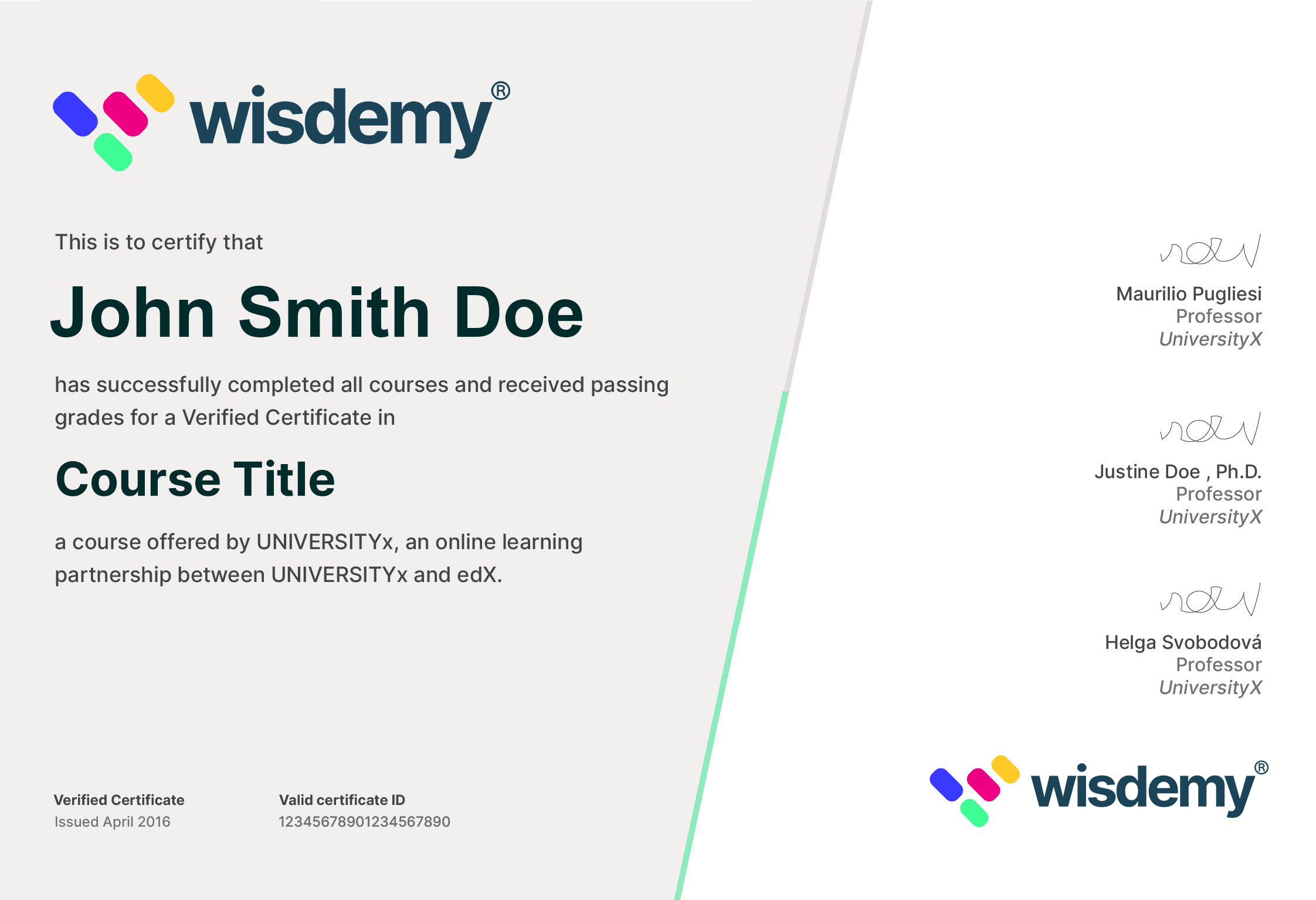
Boost your career and your talents.
With a validated certificate that demonstrates your learning, wow your employer.
Take up a challenge.
All of us occasionally need an additional push. You stay motivated by working for a credential.
Let the world know about it.
Using the special URL we give you, you may safely distribute your validated certificate to others.
Request follow-up
Fill in the form below and one of our student advisers will contact you soon.
How learners like you are achieving their goals
Executive Education
A smart way to enhance my knowledge within a short period of time, the course is very productive and beneficial for me...so grateful that i completed successfully...i would recommend my friends and family about the course.

Andrew Samson
MaldivesExecutive Education
Truly enjoyed the Strategic Management and Leadership Level 7 course and it provided me with a clear insight and helped me in my daily work as Plant Manager.

Jason Momodu
VietnamExecutive Education
The modules were well structured, and gave me the knowledge to make sound decisions that maximize performance.

Jason Momodu
VietnamExecutive Education
I have learned a lot and gain experienced in this course. At first, I did not have confidence when standing front of audience but now, it is a different story.

Jason Momodu
VietnamExecutive Education
Truly enjoyed the Strategic Management and Leadership Level 7 course and it provided me with a clear insight and helped me in my daily work as Plant Manager.
Joe Jonny
GhanaExecutive Education
Lorem ipsum dolor sit amet consectetur adipisicing elit. Eveniet blanditiis dolorum quo neque harum a, voluptatibus eum animi commodi esse.
Ken Ekene
NigeriaExecutive Education
A smart way to enhance my knowledge within a short period of time, the course is very productive and beneficial for me...so grateful that i completed successfully...i would recommend my friends and family about the course.
Jennifer Babatunde
NigriaExecutive Education
I have learned a lot and gain experienced in this course. At first, I did not have confidence when standing front of audience but now, it is a different story.