
International Postgraduate Diploma in Accounting and Finance (Level 7)
Earn a qualification recognising your professional expertise in Healthcare management and enhance your skills in leading online learning initiatives.
About the course
The International Postgraduate Diploma (IPGD) in Accounting and Finance is designed to fit around work and personal commitments. World-class teaching is delivered via pre-recorded online lectures to enrich the learning experience. We have perfected the art of delivering practical innovation and development skills. Our practice-based approach focuses on addressing real-world business problems.
We don’t just give you the theory; we ensure you learn how to apply it in your working life immediately, with case studies, webinars, and business simulations, and 100% project-based.
Aim of the Programme:
This course aims to provide students with advanced knowledge and skills in accounting and finance. The program is designed to enhance their career prospects and enable them to succeed in today's dynamic business environment.
Programme Structure
This program consists of 6 compulsory units, which are equal to a total of 120 credits.
Course details
Mode of Study: BlendedAssessment: Research-based Assignments
This course provides a comprehensive overview of key concepts and skills necessary for success in the accounting and finance industry. The program is divided into six modules, starting with investment analysis and covering corporate reporting, global finance and strategy, strategic financial management, strategic audit, and business research methods. By the end of the program, students will be equipped with the skills and knowledge needed to advance their careers in the field of accounting and finance.
After the successful completion of the programme, the learner will be able to;
- Apply investment analysis theories and principles to evaluate potential investment opportunities and manage associated risks.
- Interpret financial statements according to International Financial Reporting Standards (IFRS) to make sound financial decisions, assess an organization's performance, and communicate financial results effectively.
- Utilize managerial accounting techniques and tools to support organisational budgeting, decision-making, and performance evaluation.
- Apply strategic audit principles and methods to identify and evaluate strategic risks and opportunities, improve corporate governance and control, and assess internal control systems.
- Evaluate financial risks and opportunities globally, apply strategic financial management principles and theories to make investment decisions, and manage financial resources effectively.
- Synthesize knowledge and skills from all modules to analyze complex business scenarios, problem-solve, and make sound decisions.
- Present financial data, analyze financial performance and provide recommendations to stakeholders using effective and professional written and oral communication skills.
- Demonstrate ethical and professional responsibility by applying codes of ethics, corporate governance, and social responsibility principles in the accounting and finance profession.
Module: ASSIGNMENT & STUDY GUIDELINES
Lecture: 5
This module provides the most critical information about the study course and assignment submission.
VIDEO - How to Avoid Plagiarism in Your Writing
Harvard Referencing Style Guide
How to Summarise - Assignment Guide
Summarising, Paraphrasing, Quotation for your Assignment
Official Title Pages
Module: INVESTMENT ANALYSIS
Lecture: 7
Quiz: 1
The objective of this unit involves enhancing learners' comprehension of investment theories and market equilibrium models. It entails the task of conducting bond valuations and appraising the current performance of investments. Upon successfully finishing this unit, learners will possess the ability to analytically examine the repercussions of global market developments. They will also be adept at formulating constructive suggestions for prospective investment opportunities.
Introduction to Investment Analysis
CASE STUDY - Inflation Considerations for Stock and Bond Investments
Analysis of Bonds, Forward and Futures
Stock Investment and Portfolio Management
CASE STUDY - Anglian Water Investment Portfolio
Principles of Taxation
Investment Risk Management
QUIZ - Investment Analysis
Module: CORPORATE REPORTING
Lecture: 6
Quiz: 1
The objective of this unit is to foster the capacity of learners to craft and decipher financial statements for various types of business entities. Learners will have the capability to employ pertinent accounting principles and concepts. This unit offers a chance for learners to augment their analytical skills, both quantitative and qualitative, by delving into the interpretation of financial information.
Understanding Accounting Concepts, Principles and Theories
CASE STUDY - TESCO Accounting Scandal
Understanding the Basics of Financial Statements & Auditing
CASE STUDY - The Merger of Arcelor and Mittal
Preparation and Interpretation of Accounting Information
Understanding the Accounting & Finance regulatory framework
QUIZ - Corporate Reporting
Module: MANAGERIAL ACCOUNTING
Lecture: 5
Quiz: 1
The aim of this unit is to develop learners’ understanding of the accounting and finance.
The Dynamics of Variance and Differential Analysis
Understanding Master Budgeting
Understanding Variable Costing Analysis
Understanding Cost Volume Profit Analysis
Introduction to Managerial Accounting
Managerial Accounting
Module: STRATEGIC FINANCIAL MANAGEMENT
Lecture: 12
Quiz: 1
The objective of this unit involves enhancing learners' comprehension of the strategic utilization and supervision of an organization's financial assets. It emphasizes the significance of achieving corporate goals and optimizing returns for shareholders. Additionally, learners will acquire practical expertise in crafting business strategies and creating thorough business blueprints.
Understanding cost system and its classification
Concepts and Tools of Cost Accounting
CASE STUDY - Activity based costing in Xu Ji Electric Co. Ltd
Understanding the Concept and Classification of Sources of Funds
CASE STUDY - Global Fund Raising Strategies
Understanding The Financial Performance Analysis
CASE STUDY - Financial Analysis Reporting
Understanding the Financial Ratios and its Various Types
Understanding The Budgetary Concepts and Approaches
CASE STUDY - How Maritz Accomplished a 40% IT Budget Reduction
Understanding the Working Capital Management
Understanding the Investment Appraisal Techniques
QUIZ - Strategic Financial Management
Module: STRATEGIC AUDIT
Lecture: 3
Quiz: 1
The objective of this unit is to enhance learners' comprehension of effective business strategy positioning and execution by managers. This entails conducting a thorough examination of the strategic auditing process and its associated methodologies. Learners will gain proficiency in employing appropriate investigative methods in various business scenarios, whether they are conducive or challenging.
Understanding Audit strategy and process
Historic and Current Audit Process and Procedure
Understanding Risks and Current Development in Auditing
QUIZ - Strategic Audit
Module: BUSINESS RESEARCH METHODS
Lecture: 14
Quiz: 1
The objective of this unit is to enhance learners' research capabilities, encompassing the creation of research proposals, conducting literature reviews, mastering proper referencing techniques, acquiring proficiency in data collection, and adeptly employing interviews and surveys. Furthermore, it will encompass skills related to questionnaire design, statistical analysis using SPSS, and the application of qualitative data approaches for drawing well-founded conclusions from the analyzed data.
Research Philosophies and Principles
VIDEO - Overview of the Research Onion
Selecting a Research Topic
Searching and Reviewing Literature
VIDEO - How to write a Literature Review
Developing conceptual Framework
PDF - How to create a Conceptual Framework
Research Strategy and Design
Research Methods I
Research Methods II
PDF - How Observation is Used As a Research Method
Research Methods: Data Analysis
Research Proposal and Writing Up
Research Ethics
QUIZ - Advanced Business Research Methods
Accreditation
All of our courses are accredited by the relevant partners and awarding bodies. Please refer to our information in about us for more details.Entry requirement
For entry onto theInternational Postgraduate Diploma (IPGD) in Business and Management qualification, learners must possess:
- An honours degree in a related subject or the UK level 6 diploma or equivalent overseas qualification, i.e. bachelor's Degree or Higher National Diploma
OR
- Mature learners (over 25) with at least five years of management experience if they do not possess the above qualification (this is reviewed on a case-by-case basis)
Our recognised certificate
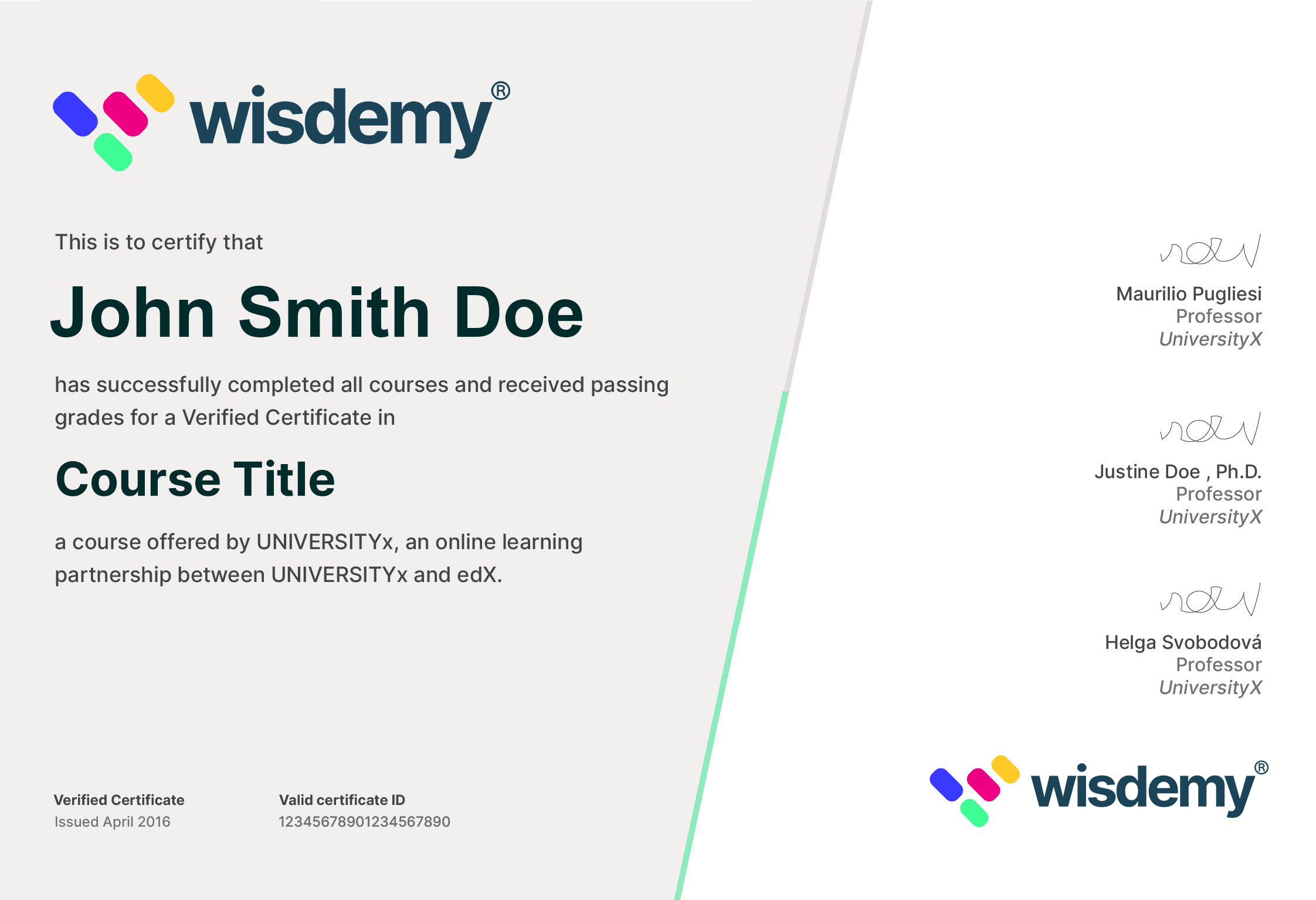
Boost your career and your talents.
With a validated certificate that demonstrates your learning, wow your employer.
Take up a challenge.
All of us occasionally need an additional push. You stay motivated by working for a credential.
Let the world know about it.
Using the special URL we give you, you may safely distribute your validated certificate to others.
Request follow-up
Fill in the form below and one of our student advisers will contact you soon.
How learners like you are achieving their goals
Executive Education
A smart way to enhance my knowledge within a short period of time, the course is very productive and beneficial for me...so grateful that i completed successfully...i would recommend my friends and family about the course.

Andrew Samson
MaldivesExecutive Education
Truly enjoyed the Strategic Management and Leadership Level 7 course and it provided me with a clear insight and helped me in my daily work as Plant Manager.

Jason Momodu
VietnamExecutive Education
The modules were well structured, and gave me the knowledge to make sound decisions that maximize performance.

Jason Momodu
VietnamExecutive Education
I have learned a lot and gain experienced in this course. At first, I did not have confidence when standing front of audience but now, it is a different story.

Jason Momodu
VietnamExecutive Education
Truly enjoyed the Strategic Management and Leadership Level 7 course and it provided me with a clear insight and helped me in my daily work as Plant Manager.
Joe Jonny
GhanaExecutive Education
Lorem ipsum dolor sit amet consectetur adipisicing elit. Eveniet blanditiis dolorum quo neque harum a, voluptatibus eum animi commodi esse.
Ken Ekene
NigeriaExecutive Education
A smart way to enhance my knowledge within a short period of time, the course is very productive and beneficial for me...so grateful that i completed successfully...i would recommend my friends and family about the course.
Jennifer Babatunde
NigriaExecutive Education
I have learned a lot and gain experienced in this course. At first, I did not have confidence when standing front of audience but now, it is a different story.